A health visitor is a qualified Registered Nurse or Midwife, with additional specialist training, who provides support to families with children from pregnancy up to 5 -years – as part of the community child health service across the UK.
Health visitors focus on promoting health, preventing illness, and reducing inequalities for the whole family. Every UK family has access to a health visitor - a non-stigmatising, trusted professional who works with families - providing support for parents as they adjust to life with a new baby, throughout early childhood up to 5 years. They are often parents’ first port of call when they have concerns about their child’s health, growth, wellbeing and development; as well as for their own health and wellbeing.
- Support from pregnancy to school: All families are offered a schedule of contacts – the number of contacts varies across the different nations of the UK, and local authorities in England.
- Home visiting: They may visit families at home, or families can meet them at clinics in the community (these may be in a range of community settings, including Family Hubs, Children Centres, health centres or GP surgeries).
- Promote health and prevent ill-health: Health visitors aim to support families to lead healthy lives. They work in partnership with families to promote health, so they can give their child the best possible start in life.
- Support for baby/ child health, growth, development and wellbeing – including regular ‘health reviews’: which provide an important opportunity to identify any problems early to ensure that children get the support they need to thrive. Getting the right help early can make a big difference to children’s outcomes.
- Support family’s health: including parent/ carer’s mental and physical health, social needs and safeguarding.
- Tackle health inequalities and deprivation: they work with families to prevent, identify and treat problems before they reach crisis point - to stop children and families becoming vulnerable or at risk.
- Connect with other services: Health visitors do not work in isolation, they are part of a wider multi-disciplinary team of support for families. Through their knowledge of local services, health visitors also play a key role in connecting families to wider community support or specialist services where this is needed.
- Personal Child Health Record: Health visitors use the Personal Child Health Record, often called the Red Book. This is given to parents at birth and includes information about immunisations, development checks and general health advice. Any health professional who sees a child can write in the Red Book.
- Transition to parenthood
- Breastfeeding/ infant feeding
- Family mental health (mothers, fathers/ partners)
- Infant mental health and social-emotional development
- Managing minor illnesses
- Health promotion: including oral health, home safety, healthy nutrition, smoke-free homes
- Uptake of immunisations
- Child development and school readiness
- Special Educational Needs and Disabilities
- Behaviour support/ Toilet training/ Sleep
- Support to access early help or safeguarding – or help with poverty, domestic abuse or alcohol/ substance misuse.
Most health visitors work as part of a health visiting team, working directly with families and communities. As well as health visitors, the health visiting team may include Registered Nurses, community nursery nurses, early years workers and allied health professionals. Others work in research, education, policy and leadership roles.
Health visitors work closely with midwives, GPs, therapists, community paediatricians, child and adolescent mental health services, specialist perinatal mental health services, and other health and social care professionals. They also collaborate with local authority children’s services, nurseries and early years settings, schools and voluntary organisations. Families may be signposted to local support groups and community services.
On top of their training as either a Registered Nurse or Midwife, health visitors need to undertake specialist training to be a Specialist Community Public Health Nurse (SCPHN-HV) - this training is at degree or master’s level.
Standards for health visiting education and practice are regulated by the Nursing and Midwifery Council (NMC) – this is important to protect the public.
The NMC ensures that all SCPHN-HV are educated to a high standard and consistently deliver, safe and effective care. To stay on the NMC register, health visitors are required to revalidate their registration every 3 years, with evidence that they are still fit to practise.
Infographics
Find out more about the role of the health visitor in our infographics:
iHV Films
Find out more about the role of the health visitor – watch our selection of short films:
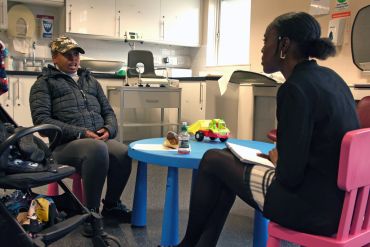
Health visiting in your community
This short film shows the many ways health visitors support families every day. It highlights their important role in helping parents and carers with their child’s health and wellbeing, and the difference they make to thousands of families each week.
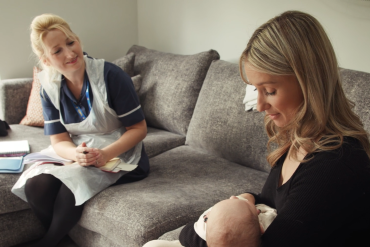
Voices from practice
Alongside our main film, ‘Health visiting in your community’, the iHV also produced a shorter film ‘Voices from practice’. In this 2½ minute film, some of the health visitor ‘stars’ from our main film above share a bit more about why they chose to become a health visitor and what the role means to them.
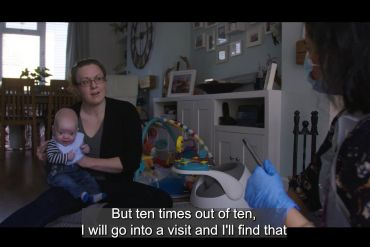
Health Visitors: for every family
This film was made as part of the Interreg 2Seas PATH project to show the UK health visiting service. The film gives a glimpse into a health visitor’s day and shows how they build trust with families. It highlights the support offered when parents need extra help with mental health or bonding with their baby. It also shows why having the same health visitor matters for building strong relationships.